Offers
 Rates
Rates V-KYC
V-KYC Debit Card Related
 Credit Card Related
 SA Welcome Kit
  Manage Mandate(s)
 Get Mini Statement
 categories
 Bloggers
 Blog collection
 Press Release
Monthly Archives: August 2026

Summary Fixed deposits and life insurance are two popular financial options in India. FDs are offered by banks and financial institutions while life insurance is typically offered by insurance companies. Life insurance is designed to provide financial protection against life’s uncertainties, while fixed deposits (FDs) are savings instruments that offer stable returns through a fixed…
Summary You can easily use a fixed deposit as a collateral to secure a loan. The loan amount you can get against your FD is usually dependent on your FD’s value, bank’s terms and conditions and loan type. Anyone with an existing FD can use it as a collateral to obtain a loan. Loans against…
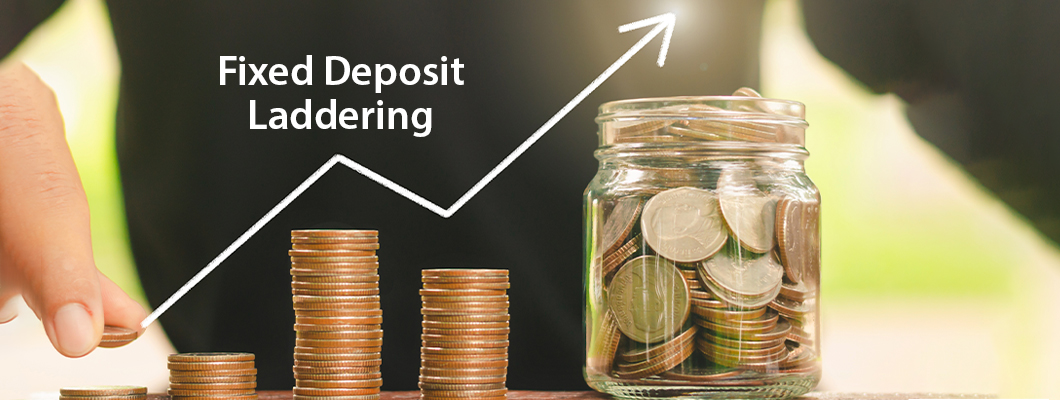
Summary: Fixed deposit laddering is an investment strategy where you spilt your money across multiple FDs with different maturity dates. It serves as a regular income stream whilst allowing higher liquidity and flexibility to use your funds whenever you need. FD laddering helps to mitigate reinvestment risks and meet your short or long-term financial goals….
Summary DICGC protects eligible bank deposits up to ₹5 lakh per depositor per bank, including both principal and accrued interest. The limit applies to the combined value of eligible deposits held with the same bank, so spreading deposits across different insured banks can increase the amount covered. Fixed Deposits (FDs) have long been a preferred…
Summary A loan against FD can be a smarter way to meet short-term cash needs without losing the interest and compounding benefits of your deposit. Breaking the FD may still make sense when you need the full amount, want to avoid repayment, or the FD is close to maturity. The better option ultimately depends on…